
Integrating Model Context Protocol (MCP) and AI Coding Agents into Regulated Enterprise Workflows
How banks, insurers, and public-sector teams wire Claude Code and MCP tool servers into identity, change management, and private Kubernetes inference—without a shadow-IT ChatGPT problem.
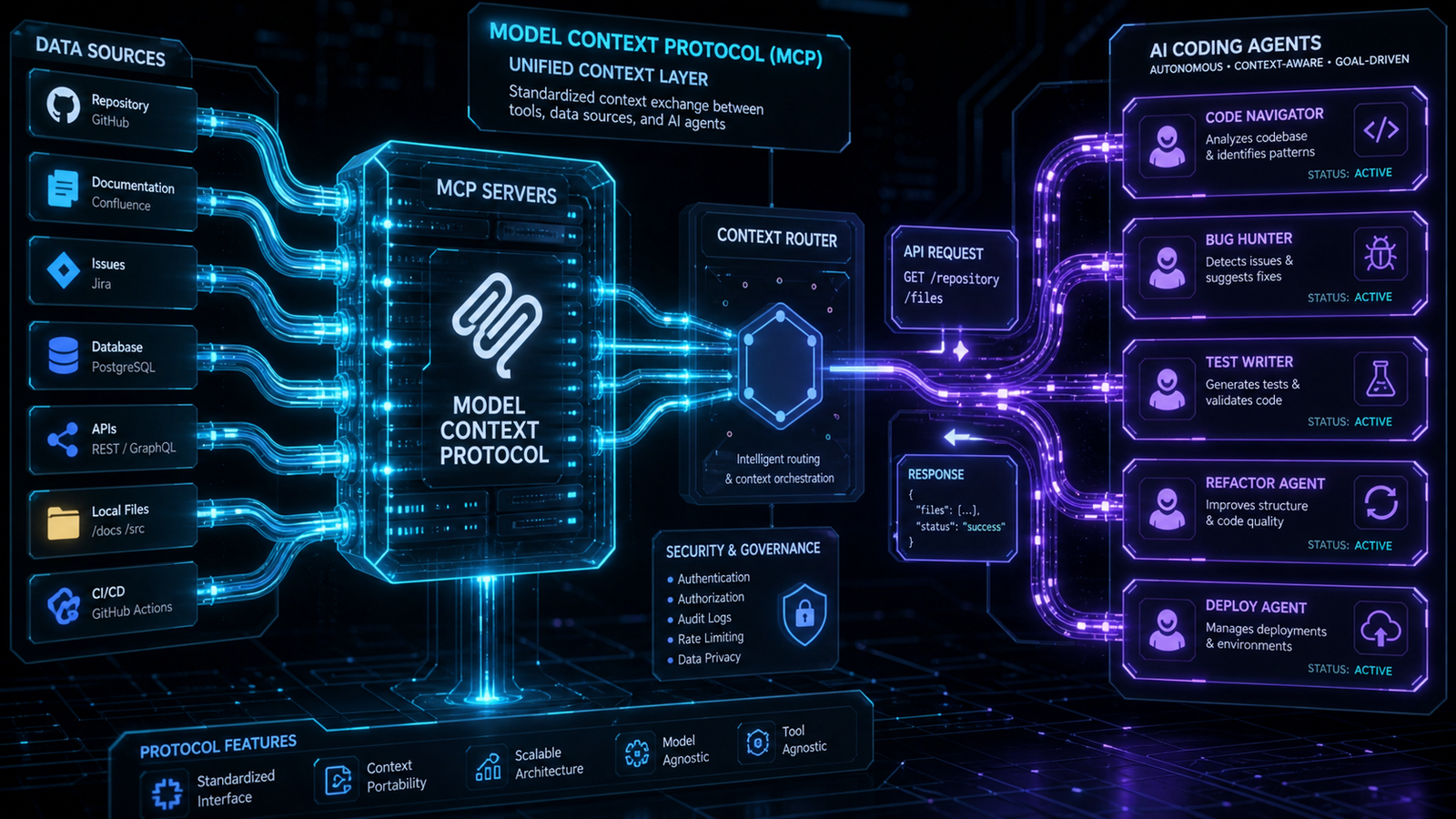
The regulated enterprise cannot treat LLMs as chat widgets
Banks, health insurers, and government agencies need AI that integrates with existing identity, audit, and change-management systems—not shadow ChatGPT tabs on analyst laptops. Model Context Protocol (MCP) provides the contract layer between agents and enterprise APIs.
MCP tool servers with scoped, auditable access
Each MCP server exposes a narrow tool surface: read-only CRM lookups, ticket creation with mandatory fields, or repository operations within branch policies. Tokens are short-lived, rate-limited, and logged to the same SIEM that monitors human access.
Claude Code inside your branching policy
Autonomous coding agents draft pull requests; senior engineers review and merge. Evaluation harnesses in CI run static analysis, infrastructure policy checks, and golden-path test suites before any agent-generated diff reaches staging.
Private inference on Kubernetes
For workloads that cannot leave the tenant boundary, we deploy self-hosted models on AKS or EKS with private endpoints, network policies, and prompt templates approved by security architecture.
Governance that scales with adoption
Tool registries, role-based access, and quarterly access reviews turn ad-hoc experiments into governed platform capabilities. Your CISO signs off on capabilities, not individual prompts.